
How AI Is Reshaping the Tech Organization
Jul 26, 2026 · 5 min read
[this article was originally published on 26 March 2026, this is a re-upload]
Roles are changing, teams are shrinking, and the rules about who owns what are being rewritten, faster than most organizations are ready for.
In a recent workshop, I brought together seasoned leaders and experts across product, design, and engineering to take an honest look at what AI is actually changing; not in theory, but in day-to-day work.
The conversation quickly moved beyond tools. What emerged was a picture of roles under pressure, blurring boundaries, and an organization design that simply hasn't caught up with the new reality.
The workshop ran in two parts. First, we mapped how AI is transforming each core tech role. Then we asked the harder question: if those roles are changing this fundamentally, what does the organization itself need to look like?
Part One: Every Role Is Being Redrawn
AI is not just automating tasks. It's shifting the center of gravity within each discipline. Product managers, designers, and engineers are all finding that their job descriptions are being quietly rewritten around them.
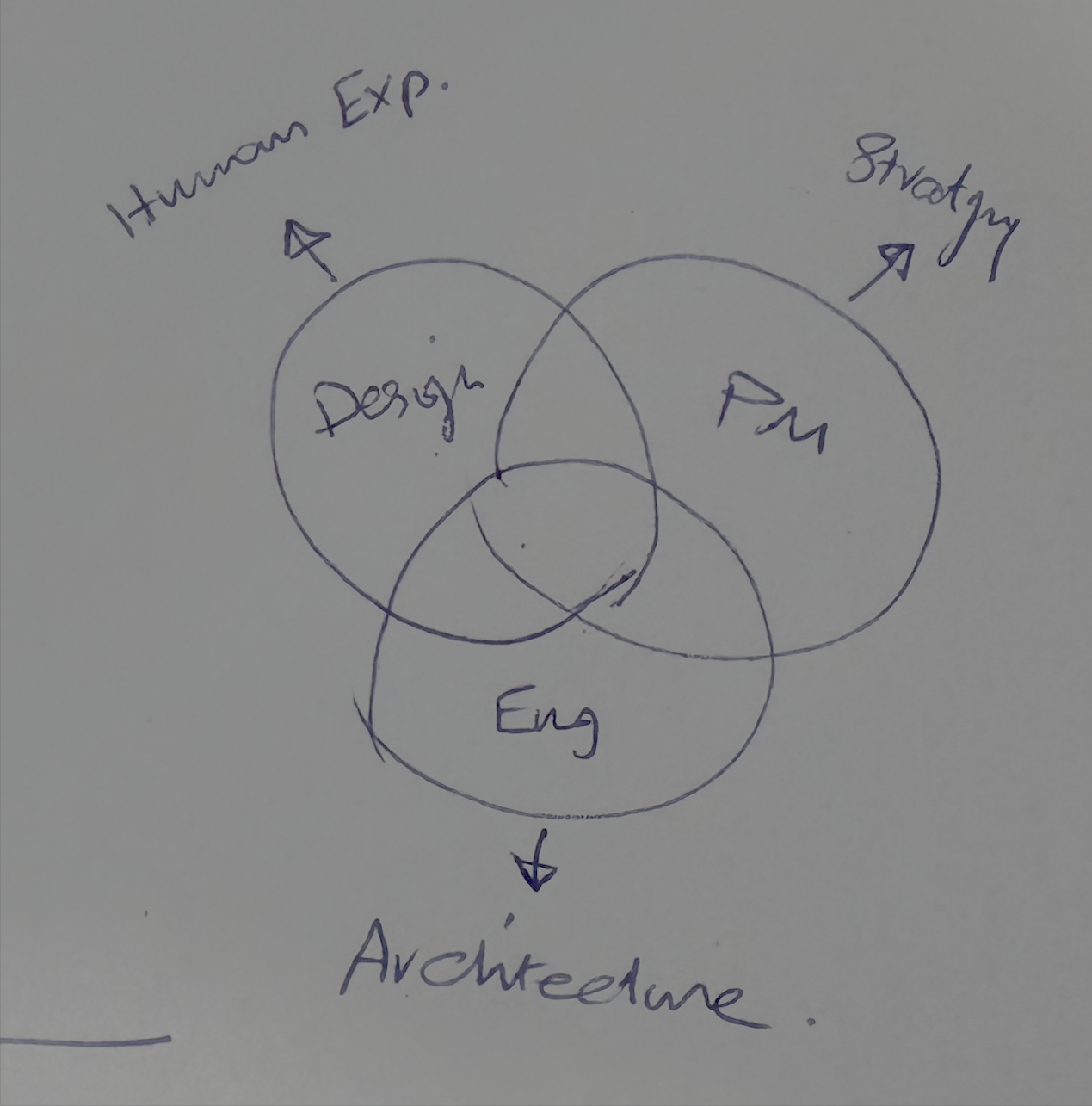
Product Management
Lines between engineering and product are blurring, with a growing expectation that PMs can "build", including prototypes, not just specs.
The artifact landscape is evolving: automated flows and interactive prototypes are increasingly replacing the traditional Product Requirements Document.
There is a renewed emphasis on product craft and vision, the distinctly human contribution AI cannot replicate.
Being "AI-native" now requires genuine tools and architecture awareness, not just a passing familiarity with AI features.
UX Design
The promised productivity boost from AI is real in places, but often overstated. A gap between expectation and reality that teams are still navigating. This is true for Design, as well as all major three disciplines as well.
"Vibe coding" is entering the designer's toolkit: AI-native design increasingly requires some ability to work directly with code.
Routine manual research is shrinking, but this raises a sharper question about where the genuine value of UX lies.
As AI mediates more interactions, including AI-to-AI flows, information architecture and experience design become more critical, not less.
"As AI mediates more interactions, including AI-to-AI flows, information architecture becomes more critical, not less. This is where UX design finds its new center of gravity."
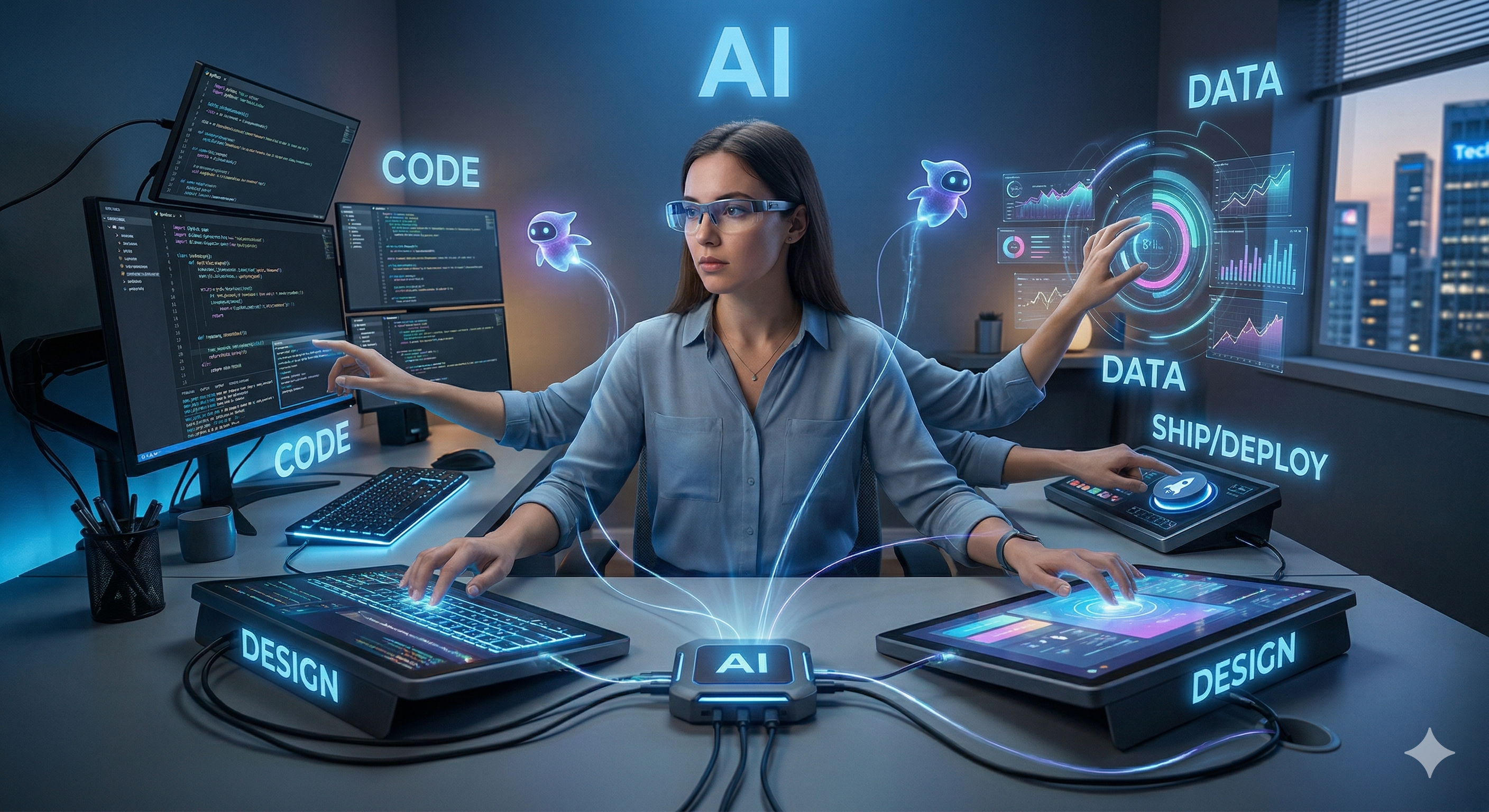
Engineering
Scope is expanding significantly; engineers are expected to own more, end to end
Process is being restructured around new AI-assisted tooling, changing how code is written, reviewed, and shipped.
Also, the role itself is shifting from "coding" to reviewing, judging, and architecting.
Hard technical skills are becoming more valuable, not less. AI handles the boilerplate, but judgment and depth matter more.
Accountability remains firmly with the human engineer, regardless of how much AI is involved in the output.
The barrier to starting a new company has dropped, individual engineers now have enough leverage to build things that once required a full team.
Part Two: What This Means for the Organization
If the roles are shifting, the structures built around those roles have to follow. Four themes kept surfacing.
1. Teams are shrinking, but seniority is rising
A team that once needed 2 PMs, 1 designer, and multiple engineers can now operate with a fraction of that headcount. But this compression makes seniority more important, not less. Fewer people means every person carries significantly more weight.

2. Generalists vs. specialists, it depends on your scale
Not all companies are responding to these pressures the same way. Small companies and startups will increasingly hire tech generalists; people who can span multiple disciplines and move fast. Large corporates will double down on specialized tech engineers; depth and domain expertise matter more at scale, where complexity and compliance require genuine mastery.
3. API is the new gold
As AI systems become deeply embedded in products, the organizations that own clean, structured, proprietary data serviced via well-connected APIs will hold the most strategic advantage. Data+API is no longer just an asset, it's the moat.
4. Decision-making stays with humans
Despite the compression of teams and the rise of AI tooling, strategic decisions remain with stakeholders. AI accelerates execution, it doesn't replace judgment. Accountability stays with humans. That's not a consolation, it's a competitive advantage for anyone who takes it seriously.
5. Specifications becomes even more crucial for speed and quality
Tech specs will become the new goal; for the Agentic AI, clear and defined domain and architecture documentation would be the key to decrease the amount of reworks on the prompts needed for developing features.
The Org Chart Is a Lagging Indicator
What the workshop surfaced, perhaps more than anything, is that the organizational response to AI is lagging well behind the operational reality. Engineers are already taking on more scope. Designers are learning to code. PMs are expected to prototype. And yet most org charts still reflect the world of three years ago.
The most important shift may be cultural rather than structural: a move toward higher trust, higher ownership, and higher accountability, with smaller teams carrying significantly more weight.
The lower barrier to entry for starting companies is also worth taking seriously. The same dynamics that let a lean team do what once took twenty people also means more competition, faster cycles, and a higher premium on the things AI cannot replicate: taste, judgment, vision, and the ability to earn trust.
"Accountability stays with humans. That's not a consolation, it's a competitive advantage for anyone who takes it seriously."
Recap
Three disciplines in flux. Teams half the size, twice the pressure.
A split between companies betting on generalists and those doubling down on depth.
Data and APIs as the new moat.
Specs as the new source of speed.
And through all of it; judgment, accountability, and decision-making remaining stubbornly, usefully human.
The org chart will catch up eventually. The question is whether yours leads or follows.